
Last updated October 15, 2026
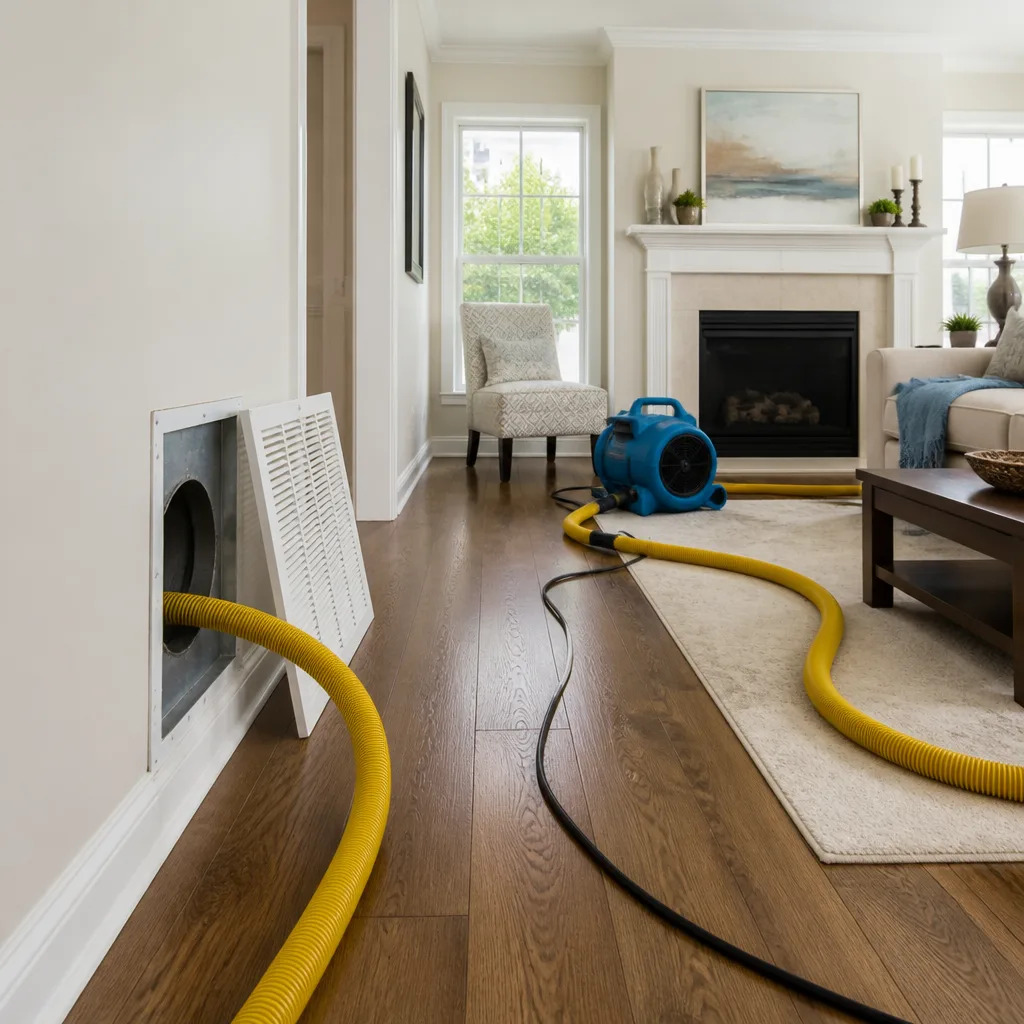 Whole-home duct cleaning
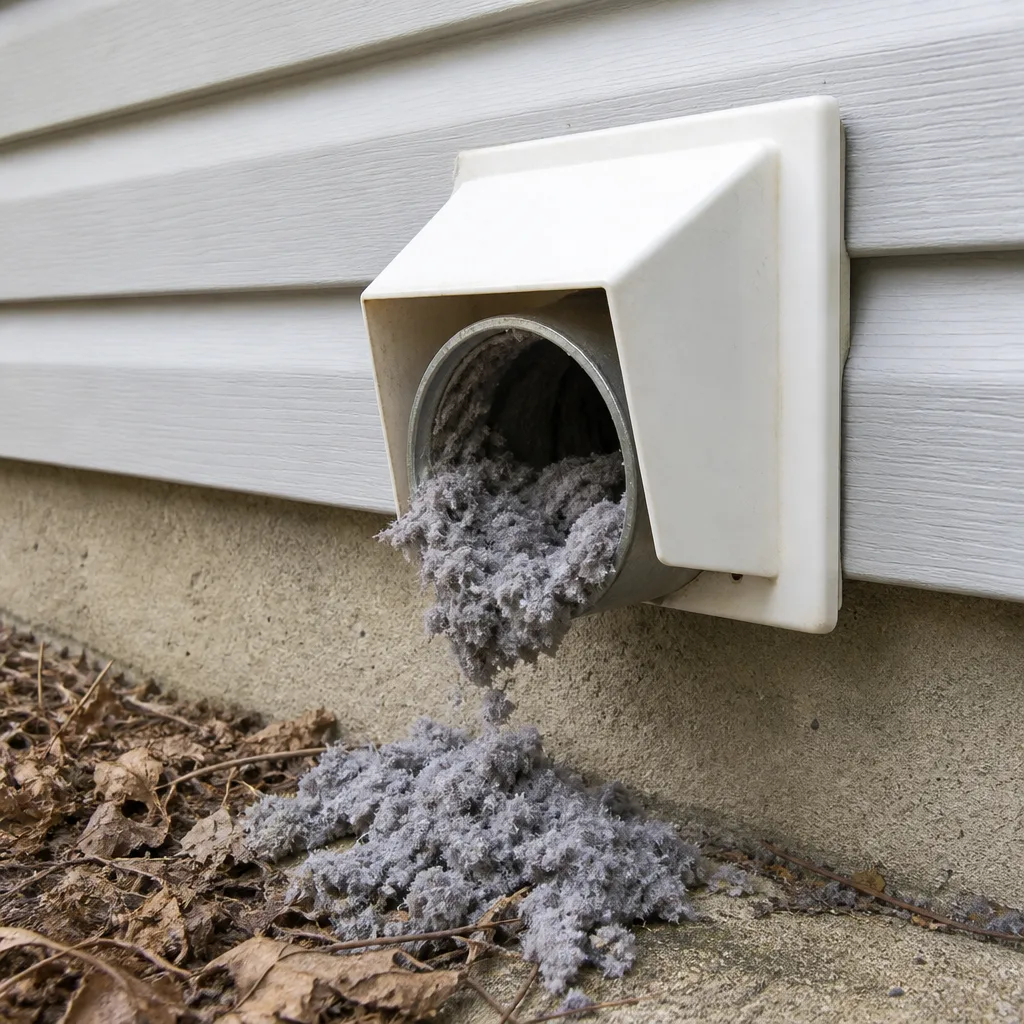 Dryer vent cleaning
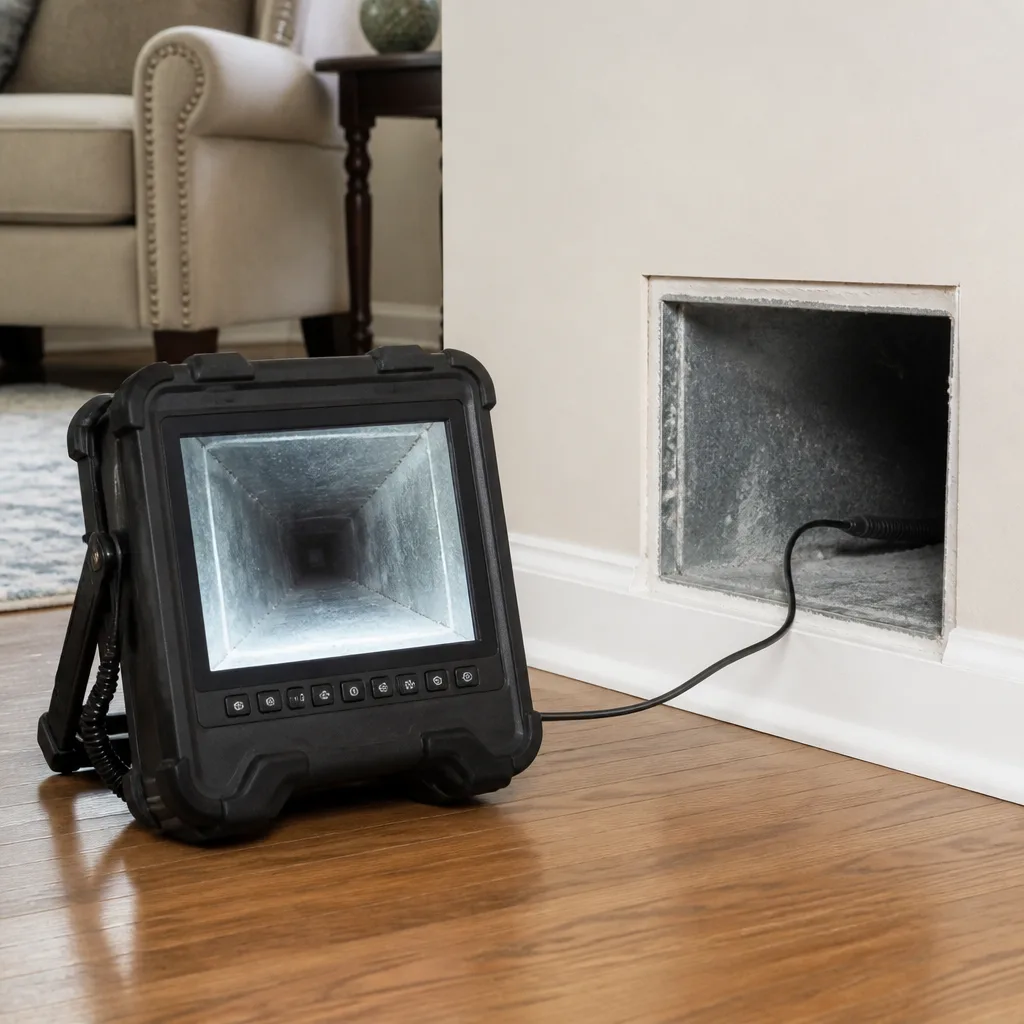 Camera inspection
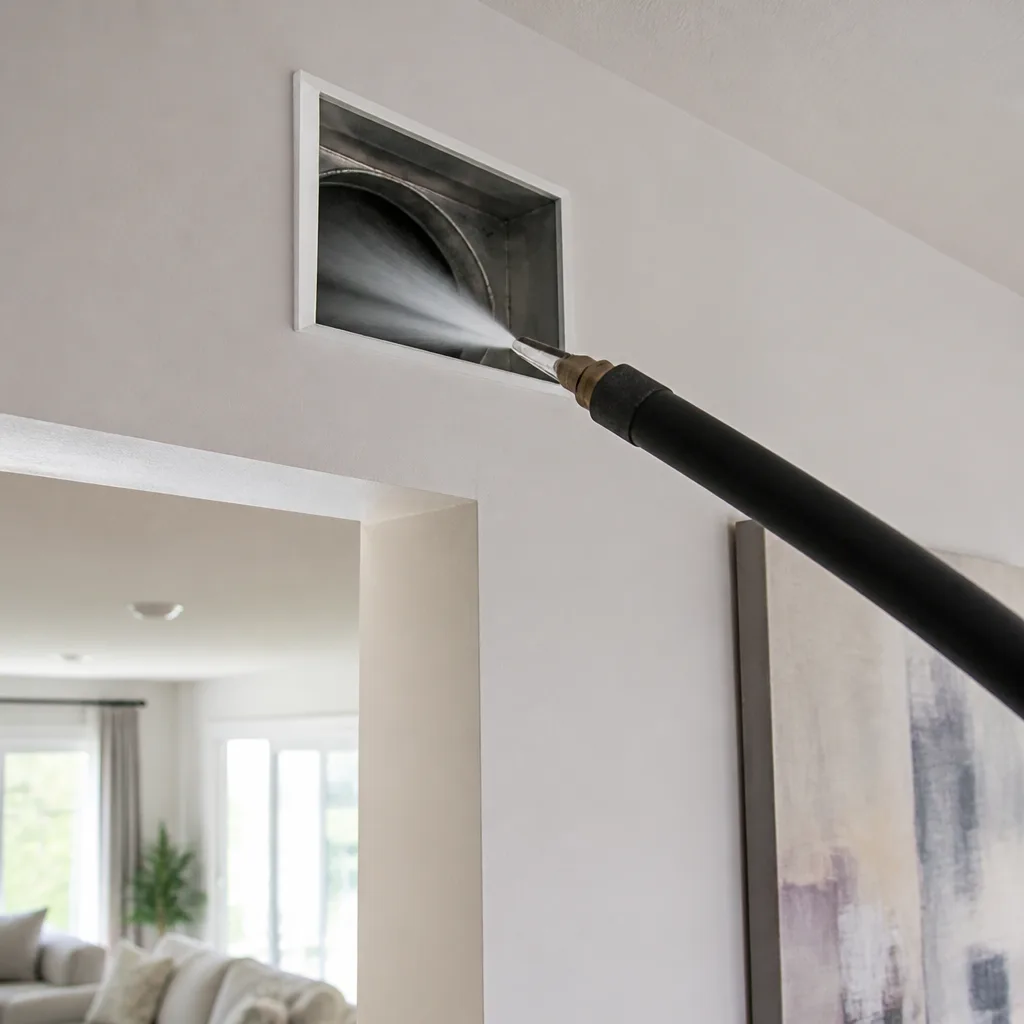 Sanitizing & deodorizing
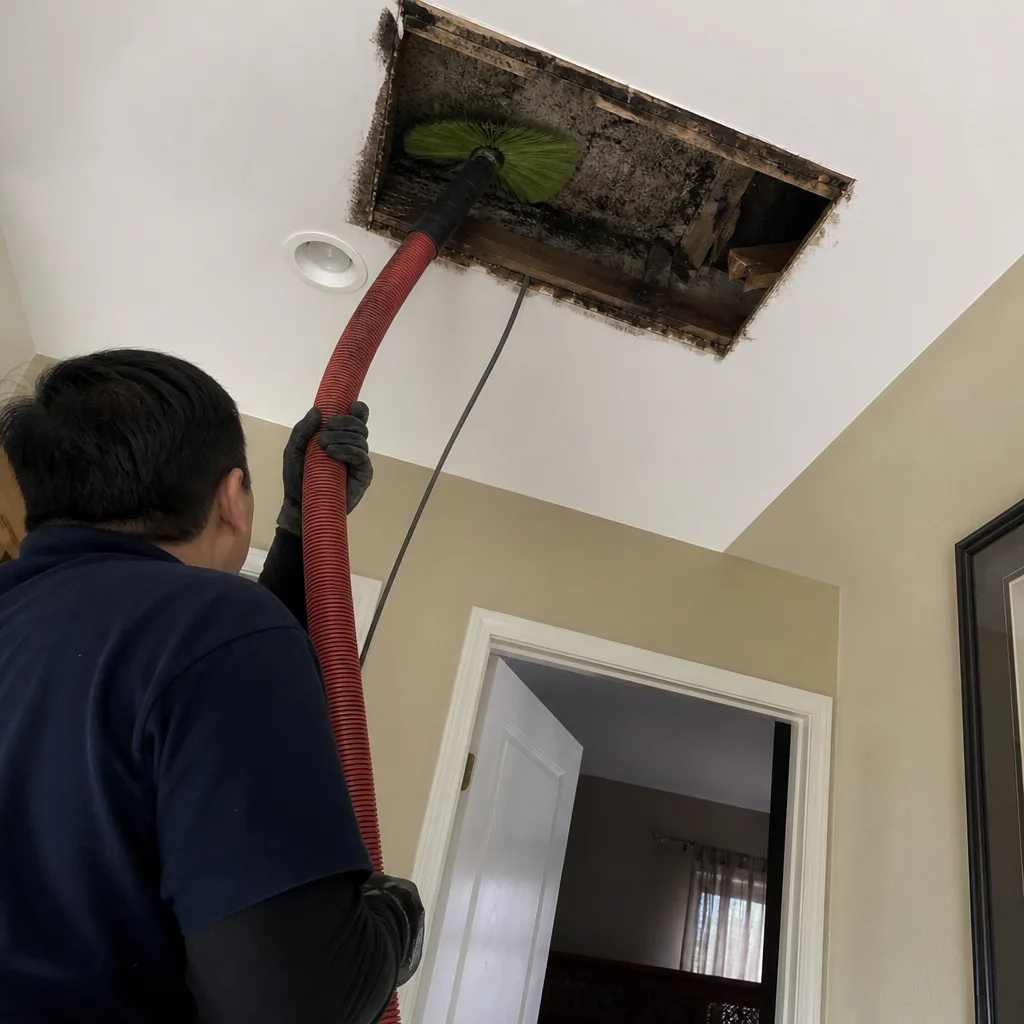
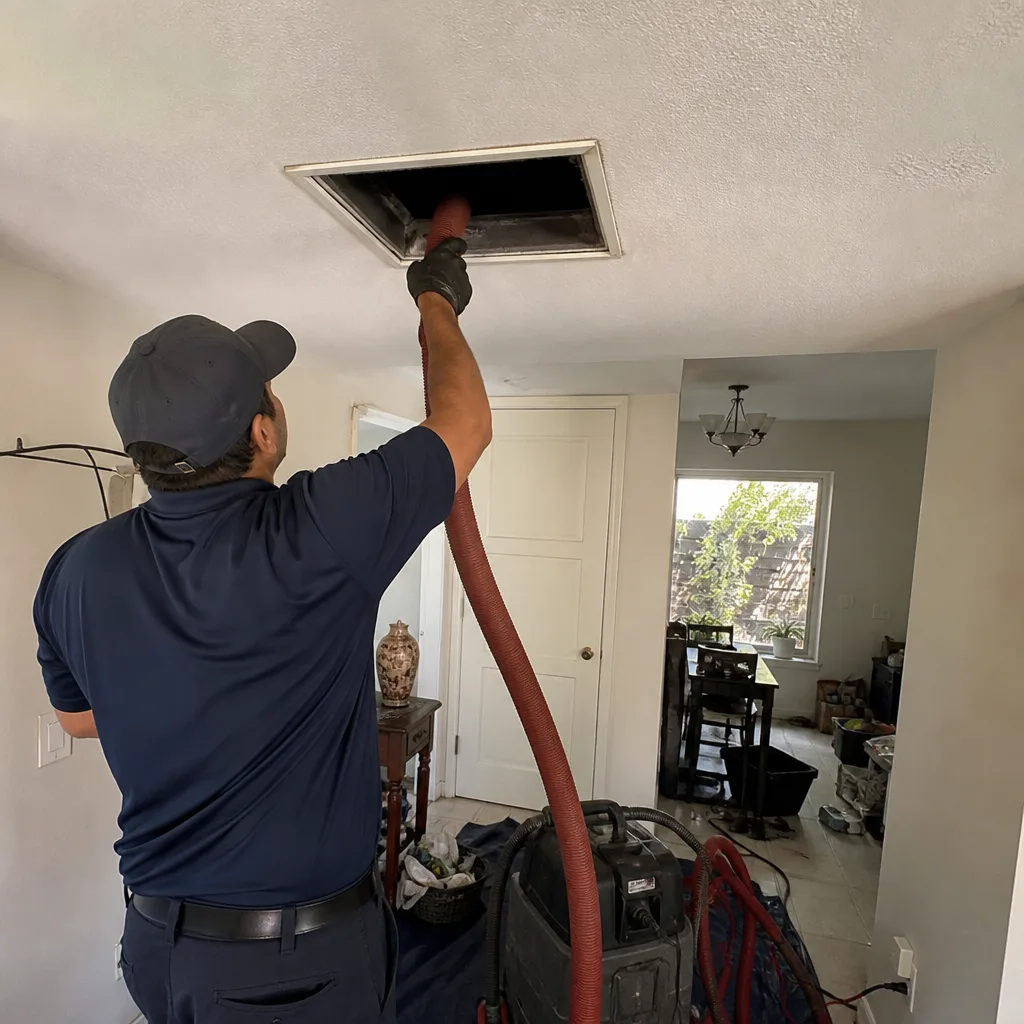
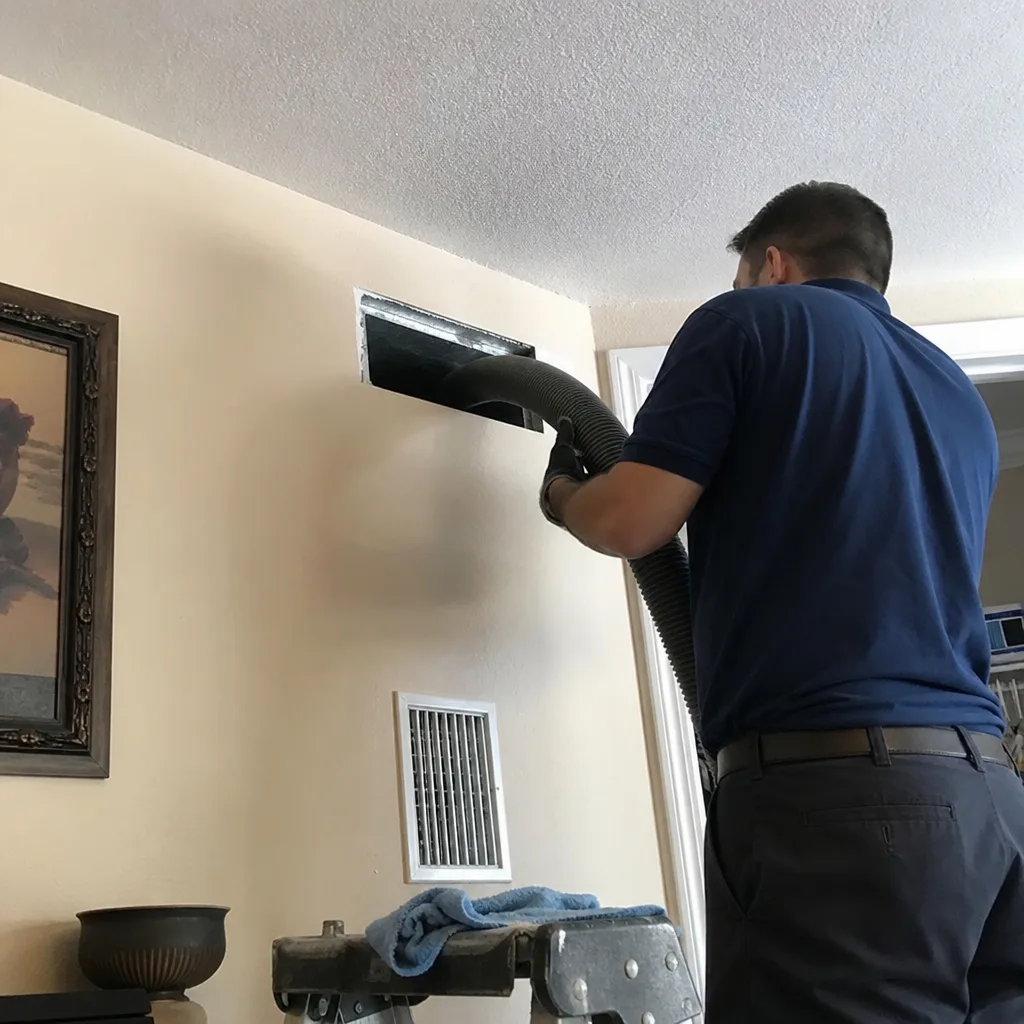
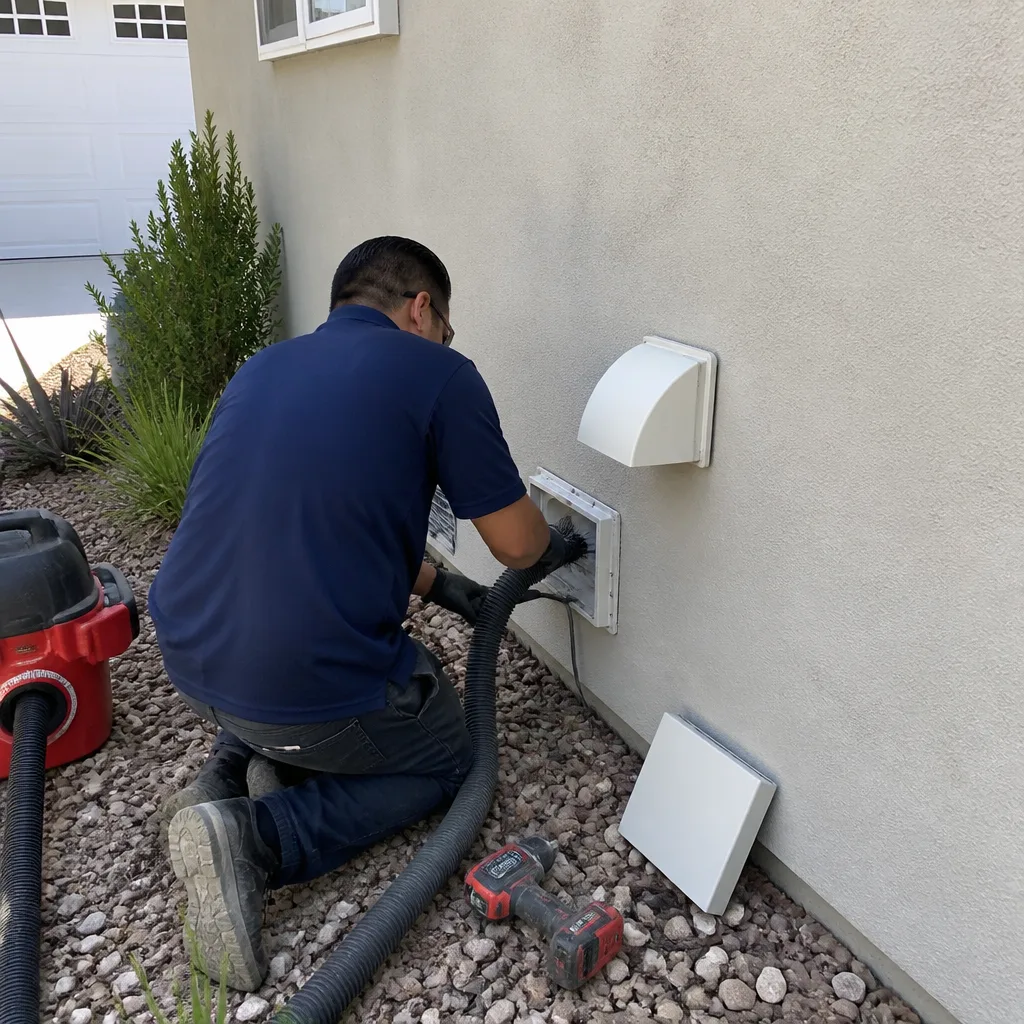
Whole-system duct and dryer vent check with before-and-after photos - you see exactly what came out of your vents
That "$99 whole-house special" is a bait ad - the real number appears once they are in your hallway, or the "clean" is a shop-vac at the register. We photograph the inside of your ducts before and after instead.
Air Duct Cleaning Warning Signs: A Long Beach Homeowner’s Reference Guide
Your ductwork moves more air than anything else in your home. In Long Beach, where coastal moisture meets warm inland air, that system can quietly collect dust, sand, pet dander, and humidity-driven film for years before you notice anything beyond a vague stuffiness. But the ductwork almost always shows physical evidence before the air quality problem becomes obvious. You just need to know where to look. This guide teaches you to read the registers, filters, and air handler for the specific signs that separate a system overdue for our Air Duct Cleaning services from one that’s simply accumulating the normal dust of a lived-in home.
Styles & brands we work with
Quick Answer
The clearest warning signs that your air ducts need cleaning are visible: gray or black dust rings around supply registers, filter loading that outpaces its rated lifespan, visible dust blowing from vents when the system kicks on, and musty or metallic odors coming from supply air. If you see any of these in a Long Beach home, the ducts are actively contaminating the air you breathe, not just passively collecting dust. A professional air duct cleaning in Long Beach addresses the source, not just the symptom.
Table of Contents
- The Gray Dust Ring: What Your Registers Are Telling You
- Filter Loading Rate: A Diagnostic Tool Hidden in Plain Sight
- Musty vs. Metallic Odors: Two Different Problems, Two Different Responses
- Inconsistent Room Temperatures: The Duct Blockage Connection
- Moisture Intrusion: Visual Signs That Demand Immediate Action
- Visible Blowback and Start-Up Puffs: What They Actually Mean
- The Return Side: What Most Homeowners Never Check
- Common Mistakes to Avoid
- When to Call a Professional
- Frequently Asked Questions
- The Bottom Line
The Gray Dust Ring: What Your Registers Are Telling You
Walk to any supply register in your home, the ones that deliver conditioned air into a room. Look at the frame where the register meets the wall or ceiling. A faint, even dust film across the whole surface is normal and just means it has been a few weeks since it was wiped down. But a dark gray or black ring concentrated around the outer frame, where the metal lip sits against the drywall, is a different story.
That ring is a pressure signature. When ducts are clean, airflow exits the register in a controlled pattern and the air washes straight into the room. When ducts are heavily coated with debris, airflow resistance increases and the system pressurizes slightly differently. Air leaks past the register frame at the edges, carrying fine particles with it. Those particles stick to the wall surface. Over time, they build into a visible ring. It means the debris inside the duct is not staying inside the duct. It is being driven outward every time the fan runs.
In Long Beach homes, we’ve walked into plenty of 1960s and 1970s ranch-style houses where register rings had been painted over multiple times. The homeowner assumed the wall was just dirty. The real problem was a return-air path pulling in dust from an open crawlspace and depositing it throughout the supply network. Painting over it doesn’t stop the source. It just hides the evidence.
Here is what to check at each supply register:
- Remove the register cover (most pop out or unscrew with two screws).
- Wipe the back side of the cover with a white paper towel.
- If the towel comes away gray or black, you’re looking at years of accumulated film, not surface dust.
- Peek into the duct opening with a flashlight. Visible gray fuzz or debris on the duct walls confirms the register ring is an active problem, not a cosmetic one.
One register with a mild ring is worth watching. Three or more registers with a defined ring is worth a professional assessment. That pattern means the contamination is distributed system-wide.
Filter Loading Rate: A Diagnostic Tool Hidden in Plain Sight
Most the air filter in your HVAC system carries a manufacturer-rated lifespan. It might say 30 days for a basic fiberglass panel, 90 days for a pleated filter, or six to twelve months for a high-MERV media cabinet filter. Those ratings assume a particular level of airborne particulate in the home. When a filter maxes out well before its rated window, the system is generating particulate load from somewhere.
Here is how to use your filter as a diagnostic tool.
Track when you install a new filter. Check it every two weeks. If the surface is visibly loaded with gray or brown material within the first two to three weeks of a 90-day filter’s life, something is feeding the system. That something is usually one of three things:
- Ductwork that has never been cleaned and is shedding accumulated debris back into the airstream.
- A return-air leak pulling unfiltered air, often from a crawlspace, attic, or wall cavity.
- Post-construction dust from a remodel or repair that has settled in the ducts and keeps recirculating.
Long Beach is home to a lot of older housing stock with original ductwork. Clay tile roofs shed fine grit over decades, and many of those homes have return plenums that were sealed with materials that have long since dried and cracked. We’ve seen filters in Belmont Shore and Naples homes go from white to gray-brown in under a month, not because the family was messy, but because the return side was pulling in particulates through failing connections. A clean filter that loads fast is one of the most reliable early-warning indicators that the duct system needs attention before the air quality problem becomes a health nuisance.
A fast-loading filter is also an efficiency signal. When a filter clogs, airflow drops. The blower works harder. Long Beach runs the air conditioner for big stretches from June through early October, and a restricted filter during those months directly increases run time and monthly energy cost. The filter is telling you something. Read it.
Musty vs. Metallic Odors: Two Different Problems, Two Different Responses
Odors from supply vents get lumped together as “smells like dust.” We’ve learned over two decades in this trade that they are not the same problem and they do not call for the same response.
A musty odor from supply air usually means organic material inside the ductwork has held moisture at some point. In Long Beach, that moisture often comes from condensation in unconditioned attic runs during humid summer mornings, or from a crawlspace duct that sat in standing water after a heavy rain year. Once organic debris (dust, pet dander, old insulation fibers, pollen) gets damp inside a duct, it develops a musty smell that the moving air spreads through the house. That smell does not go away with a filter change. The material has to come out. A professional cleaning using negative-air extraction removes the organic load at the source. See The Complete Guide to Air Duct Cleaning in Long Beach for what that process involves.
A metallic odor, sometimes described as oily, hot, or slightly chemical, is usually not a duct cleaning problem. That smell indicates a mechanical issue, often a blower motor running hot, heat strips burning off material, or a component at the air handler overheating. A duct cleaning will not fix a metallic odor. That smell means an HVAC technician should inspect the equipment. The distinction matters because some homeowners schedule a duct cleaning expecting it to resolve a mechanical odor, and the smell returns because the source was never addressed.
Here is the short version. Musty equals organic contamination in the air stream. Metallic equals equipment. If you can smell the odor most strongly at the supply register rather than near the air handler, it is more likely a duct issue. If the smell is strongest at the indoor unit itself, the problem is likely mechanical and a duct cleaning is the wrong first call.
Inconsistent Room Temperatures: The Duct Blockage Connection
Let’s say the upstairs bedroom at the back of your Long Beach house runs six degrees warmer than the kitchen all summer. Most people assume the air conditioner is old, the windows leak, or the duct layout was just poorly designed. All three are possible. But a less obvious cause is a duct run partially blocked by accumulated debris. And the diagnostic sequence matters because, if the blockage is the cause, the fix is a cleaning, not a component replacement.
When a branch duct accumulates debris on its walls, the effective interior diameter shrinks. Airflow to that room drops. The system still moves the same total volume of air, but a higher share goes to the least resistant runs. The blocked room runs warm in summer and cold in winter, regardless of thermostat setting. Homeowners often try to compensate by closing other registers, which raises static pressure and can make things worse.
Here is how to check the difference between an HVAC capacity problem and a duct restriction problem:
- Wait for a hot afternoon when the AC is cycling normally.
- Remove the register cover from the warm room and compare the force of air leaving it with a register in a comfortable room.
- If the warm room’s airflow feels noticeably weaker, the restriction could be in that specific branch run.
- Inspect the duct visible inside the register boot with a flashlight. If you see a heavy dust mat on the walls, that restriction is likely physical debris, not design.
Long Beach’s older neighborhoods, including Bixby Knolls, California Heights, and the historic districts east of downtown, often have duct systems original to the house with decades of accumulated material narrowing them from the inside. A professional cleaning with a rotary brush system and negative-air extraction can restore the effective diameter of those runs. But if the airflow is weak and the duct walls look clean, the issue is more likely a design or damper problem, and a cleaning would be the wrong spend-something we cover in DIY vs Professional Air Duct Cleaning: The Long Beach Homeowner’s Decision Guide. That is why checking airflow strength before calling anyone is worth five minutes of your time.
Moisture Intrusion: Visual Signs That Demand Immediate Action
Moisture is the accelerant that turns ordinary dust into a real indoor air quality problem inside a duct system. Long Beach air is humid for much of the year, coastal homes see salt air, and many duct runs pass through unconditioned or partially conditioned spaces. All of it increases the odds that moisture finds a way in. When it does, the visual signs are specific and worth learning.
What to look for:
- Water staining on the exterior of visible ductwork: In garages, attics, and crawlspaces where ducts run exposed, look for any discoloration, rust, or darker patches on the insulation jacket or outer wall. That stain means water has been present.
- Rust on register screws or the register face: Interior supply registers in Long Beach homes sometimes show rust speckling near a bathroom or laundry area. That rust often tracks back to condensation inside the duct run.
- Stained ceiling or drywall around a register frame: A yellow-brown halo wider than the register itself can indicate moisture has migrated along the duct and into the surrounding drywall.
- Visible mold-like growth: If a flashlight inspection of the duct interior shows black, green, or fuzzy patches, that is not a dust problem. It requires professional attention immediately, and the root moisture source must be addressed or the cleaning will not hold.
- Remove or open the central return grille.
- Look at the filter. If it is loaded, change it. Then look past the filter.
- Inspect the surfaces behind and around the filter slot with a flashlight.
- If you see a thick dust mat, hair, construction debris, or anything that looks like it has been there since the house was built, that material is not being captured. It is either bypassing the filter through gaps or it was there before the filter was ever installed.
- Assuming a filter change fixes the problem. The filter only captures particles that reach it. Material already sitting downstream of the filter, in the supply plenum or branch runs, keeps circulating until it is physically removed. A new filter does nothing for that material.
- Painting over register rings instead of investigating them. We see this constantly in Long Beach homes, especially rental properties that get a fresh coat of paint between tenants. The ring comes back because the source was never addressed.
- Ignoring fast-loading filters because “the house is just dusty.” A home that produces dust on its own is usually a home where the dust is already circulating through the system. Track filter intervals and write down the dates.
- Treating all vent odors as the same problem. Musty means organic contamination. Metallic means mechanical. Calling the wrong trade wastes money and delays the actual fix.
- Closing registers in unused rooms to push more air elsewhere. In a duct system with accumulating restriction, closing registers raises static pressure and can increase leakage at every seam and joint. The air finds a way out, and it takes particulates with it.
- Assuming a new HVAC system means clean ducts. Replacing the air handler or condenser does not clean the existing duct network. Old debris stays right where it was unless it is cleaned separately.
- Waiting for allergies or respiratory irritation before checking anything. By the time a health symptom shows up, the system has been distributing contaminants for months or years. The physical signs in this guide appear first. Read them early.
Moisture inside a duct system demands a two-part response. First, the water source has to be found and stopped. Common Long Beach sources include bathroom exhaust fans venting into attic spaces instead of outside, dryer vents disconnected in wall cavities, leaky roof penetrations above attic ducts, and condensation on uninsulated supply runs. Second, the contaminated ductwork needs professional cleaning. Skipping either part means the problem returns. This is also where duct sealing in Long Beach matters, because sealing the system after a moisture event helps prevent the humid outside air from being drawn back into the runs in the first place.
Visible Blowback and Start-Up Puffs: What They Actually Mean
Stand near a supply register when the system fan kicks on. If you see a small puff of dust particles enter the room at the moment airflow starts, that is not a malfunction. It is a direct visual read of what is sitting inside the duct.
That start-up puff happens because debris settles on the duct walls while the fan is off. When the fan starts, the first slug of air moving through the system picks up loose material from the duct floor and walls and pushes it out into the room. In a clean duct system, that puff is minimal or invisible. In a heavily loaded system, it can look like a visible cloud for a second or two.
The same logic applies to visible dust motes in the air stream when the system runs continuously on fan-only mode. If you stand with a flashlight in a dark room and can watch a steady stream of small particles moving from the register into the room, those particles are being carried from somewhere upstream. The duct system is the highway they are traveling on.
In our experience across Long Beach, the homes that show the heaviest blowback are often ones where the return side has been ignored for years. The filter might be changed regularly, but the return cavity behind it, the space between the filter and the air handler, collects material that never gets removed by filter changes alone. That material is released downstream. Clean the supply side and the return side still feeds it. A full cleaning has to address both.
For what it’s worth, if the blowback smells like stale air or carries visible fibers, it is usually construction debris or deteriorated duct liner from an older system. Fiberglass-lined ducts from the 1970s and 1980s shed over time. Homes in the El Dorado Park and Los Altos areas built during that era are prime candidates. The fix for deteriorated liner is not always cleaning. Sometimes it is duct sealing or replacement of the affected run. A visual inspection tells you which.
The Return Side: What Most Homeowners Never Check
Every guide about dirty ducts focuses on the supply side, the vents that blow air into the room. But the return side, the path that pulls air back to the air handler, is where most contamination enters the system in the first place. Homeowners who only inspect supply registers are checking the exit but ignoring the entrance.
The return side in most Long Beach homes is either a single central return grille in a hallway or a small number of return grilles around the house. Behind those grilles is a cavity that feeds the air handler. When was the last time you looked inside it?
Here is a simple diagnostic sequence:
Return side contamination matters because everything that enters the return travels through the air handler and into the supply side. The return side is where pet hair, kitchen grease aerosol, sand tracked in from Long Beach’s beaches, and general household dust all enter the system. A supply-side cleaning with a dirty return cavity is half a job.
When we inspect return plenums in Long Beach, we’ve found shoes, toys, dust bunnies the size of a softball, and once a full roll of paper towels. Children push things through grilles. Pets shed into open return cavities. Renovation crews kick debris into them and never clean up. The return side is the catch basin for everything the house throws at the system. It should be inspected and cleaned as part of any complete duct cleaning, not treated as an optional add-on.
Common Mistakes to Avoid
When to Call a Professional
If you’ve checked your registers and found dark dust rings on multiple supply grilles, visible debris inside the duct runs, or a fast-loading filter that turns gray within weeks, a professional inspection is the next step. The same if you’ve noticed musty supply air in a Long Beach summer, visible blowback at fan start, or one or two rooms that consistently run warmer than the rest of the house despite adequate airflow at the unit. These are not normal operating conditions.
Hollis Air Duct Long Beach offers free estimates in Long Beach. Call (562) 548-7365 and one of our background-checked technicians will inspect the visible signs, explain what you’re seeing, and give you a written price before any work begins. No pressure, no price that changes at the door. If the system only needs a filter change, we’ll tell you that too.
Frequently Asked Questions
The clearest indicators are visible gray or black dust rings around supply registers, visible debris inside the duct when you shine a flashlight into an open register, filter loading that happens much faster than the filter’s rated lifespan, and musty odors coming from supply air when the fan runs. If you see several of these signs together in a Long Beach home, the duct system is actively contributing to the indoor air quality problem. Call Hollis Air Duct at (562) 548-7365 and we’ll tell you straight whether a cleaning is warranted.
Most Long Beach homes should have the visible signs professionally assessed every 3 to 5 years, with the exact interval depending on what your register and filter observations show you. Homes near the beach with sand infiltration, homes with shedding pets, and homes that have undergone remodeling may need attention more often. The honest answer is that the interval matters less than the evidence. Some homes go 10 years without needing it. Others need it in three. Let the physical signs in this guide be the deciding factor, not a calendar. Hollis Air Duct will inspect and tell you where your system falls. Call (562) 548-7365 for a free estimate.
Inconsistent room temperatures can mean a partially blocked branch duct, where accumulated debris has narrowed the effective air path and reduced flow to that room. Before assuming you need a bigger air conditioner, you should remove the register cover and compare the airflow in the warm room to a comfortable one. If the airflow is noticeably weaker and you see debris on the visible duct walls, a professional cleaning may restore the flow. Hollis Air Duct Long Beach can assess the restriction and give you a written price before any work starts. Call (562) 548-7365.
A musty smell from supply vents usually means organic material inside the ductwork has been damp at some point and is now being circulated through the home. In Long Beach’s humid coastal climate, condensation in attic or crawlspace duct runs is a common moisture source. The smell does not resolve with a filter change, because the organic material is downstream of the filter. A professional cleaning removes the source. If the smell is more metallic or oily, that indicates a mechanical issue at the air handler and should be evaluated by an HVAC technician instead. Hollis Air Duct can help you tell the difference during a free inspection. Call (562) 548-7365.
Duct cleaning is necessary when the physical evidence supports it: visible debris, register rings, fast-loading filters, or musty supply air. The reputation the trade has earned for pressure tactics comes from companies that quote a low teaser price and then inflate it at the door. That is not how Hollis Air Duct operates in Long Beach. Our price is written down before any work starts and it does not move. If the system does not show signs of needing a cleaning, we say so. That is the whole point of this guide: learning to read the evidence so you can make a confident call. For more guides & resources, visit our blog. For a straight answer on your system, call (562) 548-7365.
If the dust is being distributed through the duct system, a professional cleaning will reduce the airborne load that settles on surfaces. That means less time between wiping down furniture and window sills, and a slower filter loading interval. But a duct cleaning cannot eliminate all household dust, because dust also comes from skin cells, paper products, cooking, and outdoor air entering through open doors and windows. For Long Beach homes, the realistic expectation is a measurable reduction in system-distributed dust, especially in homes where register rings and blowback were present before cleaning. Hollis Air Duct cleans to the source, using negative-air extraction with professional-grade equipment from Rotobrush and Abatement Technologies. Call (562) 548-7365 for a free inspection and written quote.
The Bottom Line
The ducts in your Long Beach home give you early warning before any air quality problem becomes a crisis. Register rings, filter loading rates, start-up blowback, and supply-side odors are all measurable, observable signals that you can read without any special training. The key is looking at the right places and knowing what each sign means. If you find multiple indicators, the response is a professional assessment and, where justified, a cleaning that addresses both supply and return sides with written pricing and a written guarantee. Hollis Air Duct Long Beach has been serving Long Beach since 2004 under The Garrison Standard: arrive inside the window, price it in writing, do it by the book, leave the site clean. The evidence in your system tells the story. We’ll help you read it. Visit the Hollis Air Duct Long Beach home page to learn more, or explore our dryer vent cleaning in Long Beach service if your vent runs are overdue as well. Call (562) 548-7365 for a free estimate.
Written by Roy Castellanos, Owner at Hollis Air Duct Long Beach, serving Long Beach since 2004.
See the difference
 Before
 After
After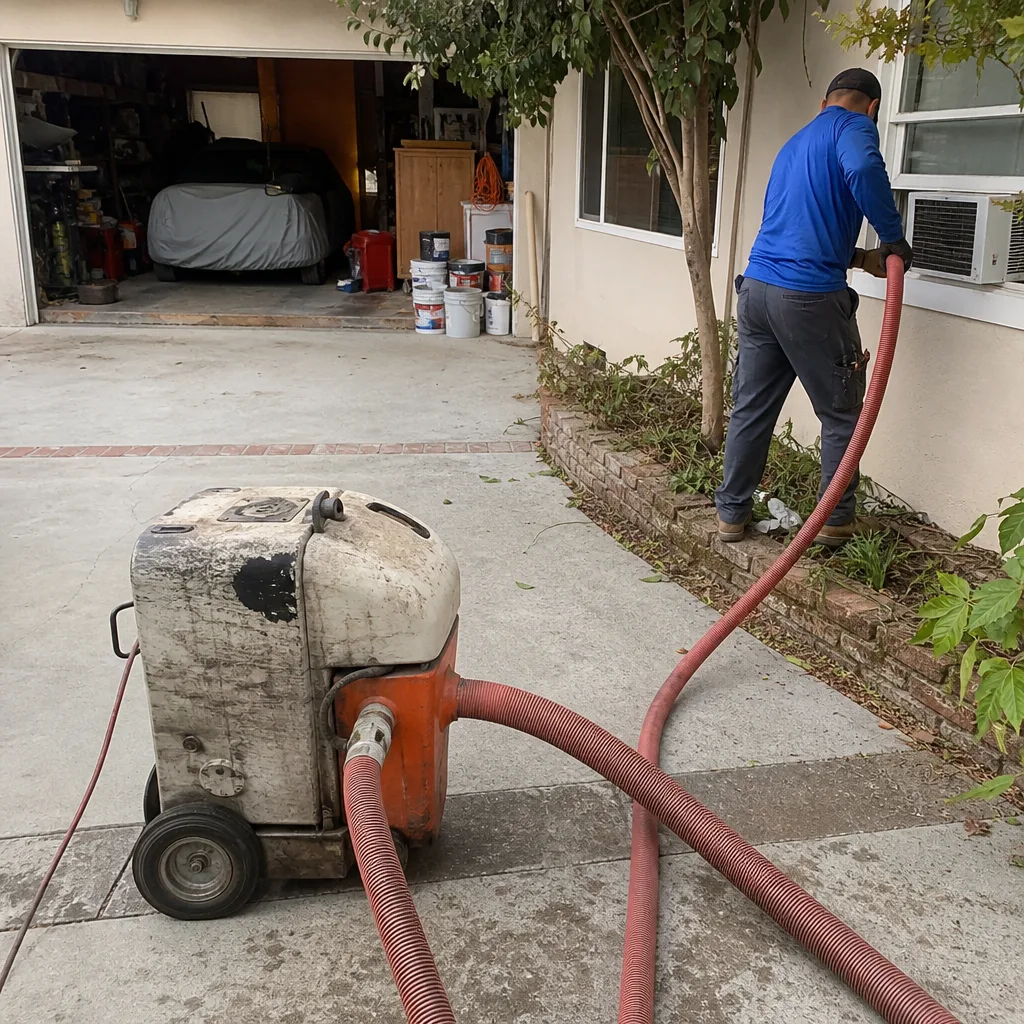 Before
 After
After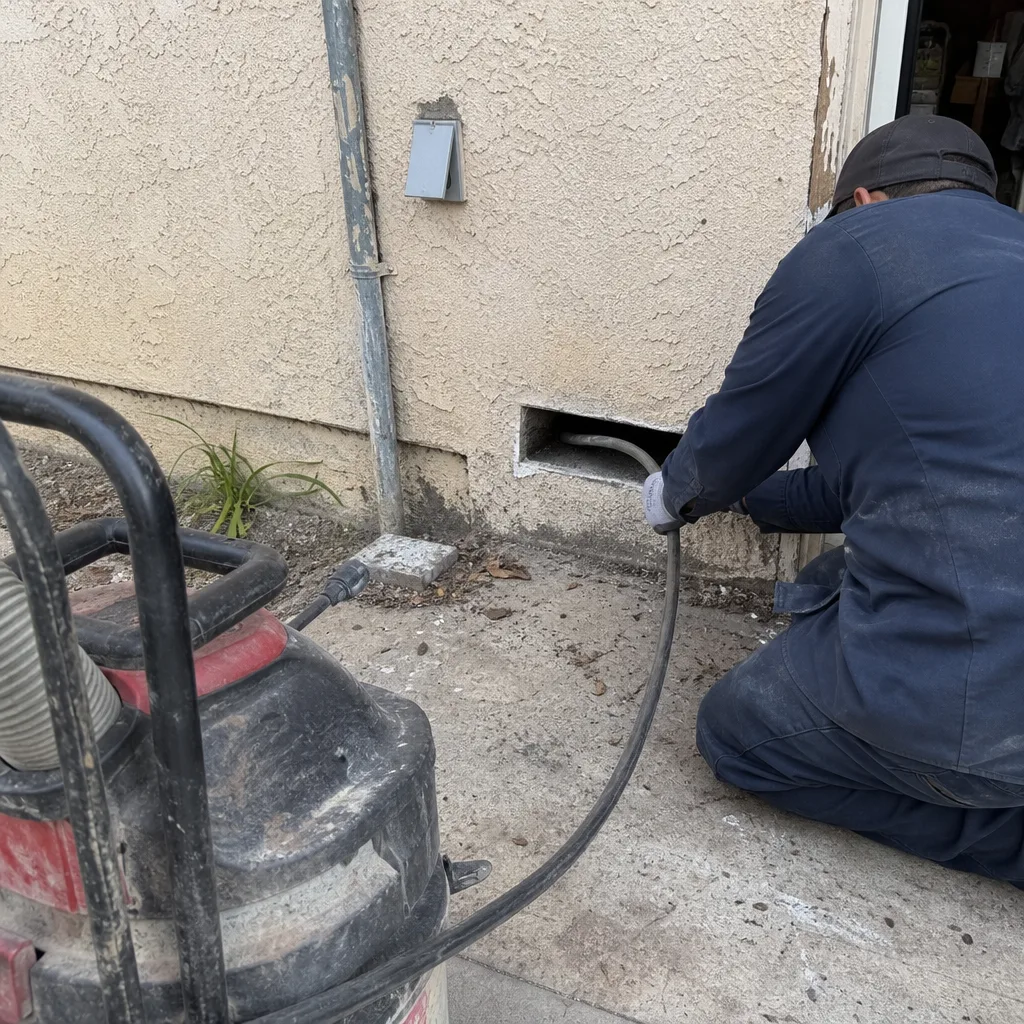 Before
 After
After